
Шифон и тафта: в чем разница?
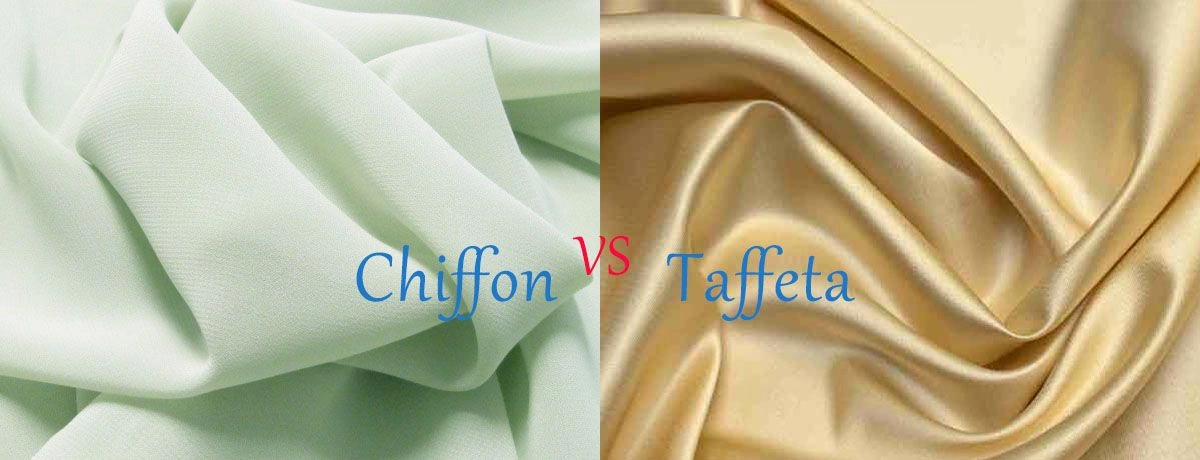
Chiffon and taffeta are both plain-weave fabrics, but they behave in opposite ways: chiffon is sheer, lightweight (roughly 30-60 GSM), and drapes in soft folds, while taffeta is opaque, crisp, and holds a sculpted shape at a medium weight of about 50-120 GSM.
The split comes from the yarn. Шифон uses fine high-twist crepe yarns that stay soft and fluid; тафта uses tightly twisted filament yarns packed into a firm, smooth cloth with a natural sheen.
For garment manufacturers, importers, home-textile wholesalers, and sourcing buyers comparing fabrics for formalwear, bridal wear, or decorative textile programs, the distinction affects silhouette, opacity, durability, handling, and cost.
Основные выводы
- Chiffon is a sheer, ~30–60 GSM plain weave that drapes fluidly; taffeta is a crisp, opaque, medium-weight (~50–120 GSM) filament weave that holds structure.
- Both come in silk or synthetic (polyester, nylon, acetate) bases; the fiber base drives cost, care, and lot consistency more than the fabric name.
- Use chiffon for flow, layering, and overlays; use taffeta for volume, bodices, and structured skirts. Many formalwear pieces use both.
- Taffeta is more durable and opaque; chiffon is delicate and frays, so both need spec-level handling notes on the order.
What's the Difference Between Chiffon and Taffeta as a Delicate Fabric?
The fastest way to tell them apart is to hold a length up to the light and let it fall. Chiffon lets light through and pools softly; taffeta blocks light, springs back, and rustles. That contrast in transparency, weight, and body is what routes each fabric to a different job on the cutting table. The table below lines up the specs a buyer actually orders against.
| Свойства | Шифон | тафта |
|---|---|---|
| Ткать | Plain weave, high-twist crepe yarns | Plain weave, tightly twisted filament yarns |
| База со стекловолокном | Silk, polyester, nylon, rayon | Silk, polyester, nylon, acetate |
| Вес | Light, ~30–60 GSM | Medium, ~50–120 GSM |
| Непрозрачность | Sheer, semi-transparent | Непрозрачные |
| Рука | Soft, fluid | Crisp, papery, rustling |
| драпировка | Fluid, floating | Структурированный, держит форму |
| Блеск | Soft, matte to gentle | Lustrous, often iridescent |
| Долговечность | Delicate, frays easily | Robust, holds up to wear |
| Лучше всего | Overlays, scarves, flowing skirts | Ball gowns, bodices, structured skirts |
Which Drapes Better, and Which Holds Structure?
This is the choice that usually decides the order. Chiffon drapes: it falls in soft vertical folds and moves with the wearer, which is why it works as an overlay, a floating skirt, or a scarf. Taffeta structures: it resists gravity, holds volume, and keeps a crisp edge, which is why it builds ball-gown skirts, fitted bodices, and anything that needs to keep its shape.
Neither is "better" in the abstract; they solve opposite briefs. A designer chasing movement and sheerness in flowing designs reaches for chiffon. A designer building volume and a sculpted silhouette for structured designs reaches for taffeta. Many formal garments use both in one piece, a taffeta base for shape under a chiffon overlay for softness, which is worth remembering at the sourcing stage.
Which Is More Durable and Easier to Produce at Volume?
Taffeta is the tougher of the two. Its dense filament weave resists snags and holds up to repeated wear and structured construction, while chiffon's open weave and fine yarns fray and snag easily, are more high maintenance, and need gentle handling throughout cutting and sewing because it wrinkles easily more than taffeta. On a production line, taffeta tolerates faster handling; chiffon runs slower because it slips and needs stabilizing. In care, chiffon usually needs hand washing or a gentle machine cycle, while taffeta can generally handle regular machine washing.
Both are produced at volume today in polyester and nylon, and chiffon is often made from synthetic fibers like polyester, which brought the price of each down and made large, repeatable runs practical.
What Are the Main Uses for Each, Including Ball Gowns?
In apparel, the two fabrics rarely compete for the same brief, they cover different halves of formalwear. Chiffon owns the flowing, sheer, layered pieces and works especially well for warm-weather wear because it helps prevent overheating; taffeta owns the structured, voluminous, shape-holding pieces and is better for cooler climates or occasions where breathability matters less. In home textiles, chiffon reads as a sheer light filter while taffeta brings body and sheen to statement pieces, especially when finished with coordinated Люверсы и кольца для штор.
| Конечное применение | Шифон | тафта |
|---|---|---|
| Вечерняя одежда | Overlays, floating skirts, capes | Structured bodices, full skirts for evening gowns and evening dresses |
| Свадебный | Veils, soft overlays for summer weddings, sleeves | Ball-gown skirts, structured gowns for winter weddings |
| Blouses & dresses | Sheer blouses, flowing dresses and school-uniform-friendly fabrics | Crisp dresses, party wear finished with rib knit polo collars |
| Аксессуары | Scarves, sashes | Evening bags, trims, bows |
| Покрывала / Пледы | Sheer curtains, light panels | Curtains, cushions, decorative drapes |
For a sourcing buyer, the practical read is that a single formalwear or bridal collection often needs both fabrics at once, so consolidating them under one supplier keeps shade families and delivery dates aligned across the line.
How Do You Choose Between Chiffon and Taffeta for a Production Run?
Match the fabric to the silhouette, then to the fiber budget to find the ideal fabric for the design brief. If the design needs flow, sheerness, or a soft overlay, chiffon is the answer; if it needs volume, a crisp edge, or a shape that stands on its own, taffeta is. Once the fabric is set, the fiber base handles cost and care: chiffon is generally more budget-friendly than taffeta, while taffeta carries a higher price point because its more luxurious materials, especially silk versions, raise both hand and price; polyester or nylon suit durable, colorfast, volume-friendly runs, and acetate offers a silk-like taffeta at mid cost.
-
Choose chiffon for eveningwear overlays, flowing skirts, sheer blouses, scarves, veils, light curtains, and wedding dresses where soft movement is wanted.
-
Choose taffeta for ball gowns, structured bodices, full skirts, formal dresses, wedding gowns, and body-rich home decor; Ткань саржевого переплетения TC 65/35 is another durable option when you need structure with a different hand.
-
Выберите оба варианта when one garment pairs a structured taffeta base with a soft chiffon layer, common in bridal and eveningwear.
Sourcing Chiffon and Taffeta from MH (Supplier Overview)
MH (Ningbo MH), established in 1999, is a China-based garment-materials and fabric supplier operating within the global textile industry, serving buyers in over 150 countries, and it carries both fabrics inside one catalog built for wholesale and manufacturing runs. With roughly 350,000 m² of production, 3,000+ workers, and 2,000+ partner manufacturers across around 10,000 tailoring materials and fabrics, a formalwear maker can pull matching chiffon, taffeta, lining, полиэфирная швейная нить, oптовый швейные нитки, and trims on the same order instead of splitting one garment across four vendors.
For garment manufacturers, importers, and home-textile wholesalers, that reach means chiffon and taffeta held to repeatable weight, shade, and finish across reorders; one-stop pairing of both fabrics with matching linings, trims, embellishments, and Вышивальная нить из вискозы 150D/2; and quotes priced against fiber base, GSM or denier, width, woven finish, and MOQ rather than a vague fabric line.
Просмотрите chiffon fabric range и taffeta fabric range, or contact MH for a spec-based quote on either fabric.
Request a chiffon & taffeta quote →


Часто задаваемые вопросы
What is the main difference between chiffon and taffeta?
Chiffon is a sheer, lightweight plain weave (around 30-60 GSM) with an airy texture that drapes softly, and chiffon fabrics are often chosen for a beautiful drape and lightweight style in warmer seasons, while taffeta is an opaque, crisp, medium-weight filament weave with a crisp texture, smooth texture, smooth feel, tight weave, lustrous finish, and shiny finish that holds structure. The difference comes from the yarn and overall texture: chiffon uses fine high-twist crepe yarns, taffeta uses tightly twisted filament yarns, and taffeta is a luxurious fabric often worn for formal fashion while chiffon suits softer style lines.
Is chiffon or taffeta better for a wedding dress?
It depends on the silhouette. Taffeta suits structured ball gowns, fitted bodices, and full skirts because it holds shape, while chiffon suits soft overlays, veils, and flowing skirts because it drapes. Many bridal gowns use both, a taffeta base for structure under a chiffon layer for softness. Taffeta is commonly used in bridal gowns with structured silhouettes, while chiffon is favored when the dress is worn in warmer seasons or for summer weddings, and taffeta is often preferred for winter weddings or cooler venues; silk fabric is a versatile fabric in bridal wear depending on season and silhouette.
Is taffeta more durable than chiffon?
Yes. Taffeta's dense filament weave resists snags and wear and handles structured construction, while chiffon's open weave and fine yarns fray and snag easily and need gentle handling on the line. Both are made in durable polyester and nylon versions for volume production.
What information do I need to order chiffon or taffeta from a supplier?
Specify the fiber base (silk, polyester, nylon, acetate), GSM or yarn denier, width, weave or finish, color, any certification (OEKO-TEX, GRS, or GOTS), MOQ, and lead time. Providing these upfront lets a supplier like MH quote accurately and hold consistent lots across reorders.
